Building a custom home in North Idaho is one of the most exciting ways to create the lifestyle you want. Whether you are dreaming of acreage, mountain views, a shop, a garden, a multigenerational layout, or a home designed around the way your family actually lives, the custom build process gives you control that buying an existing home often cannot. But it also comes with decisions, timelines, budgets, trust, and details that matter more than most people realize.
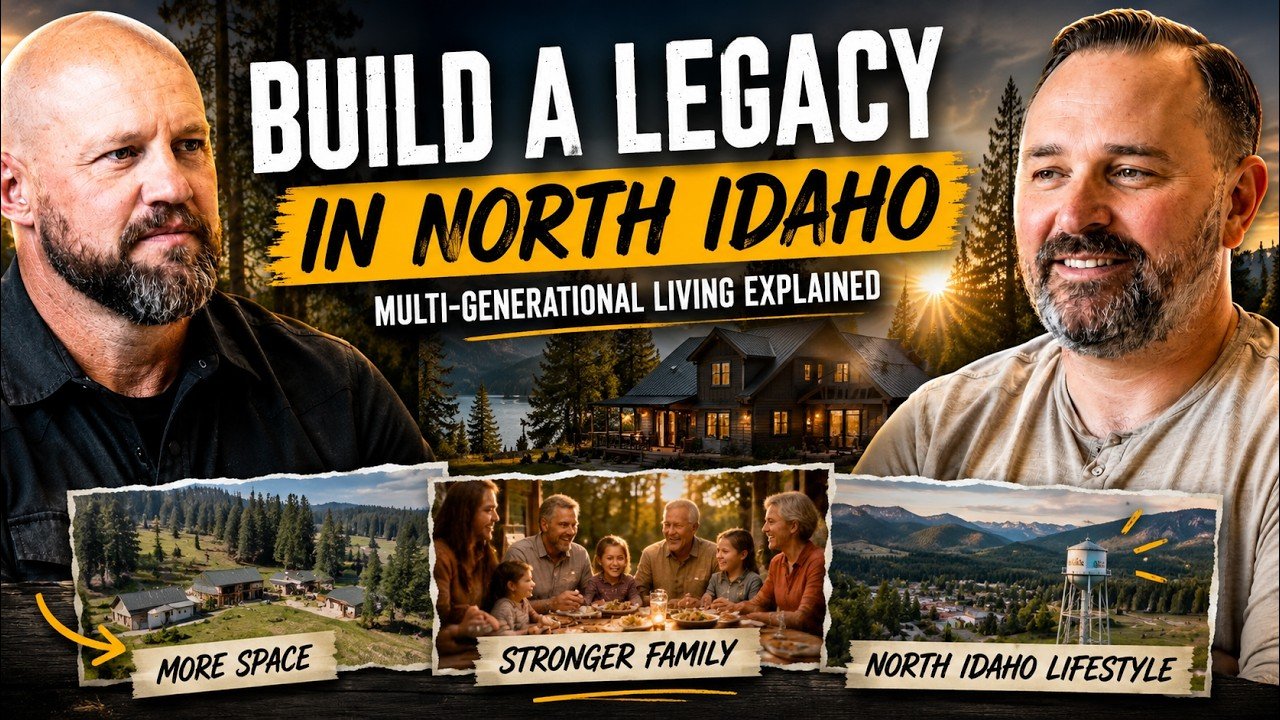
In this North Idaho Experience podcast, Dave and Seth sit down with John and Spencer from North Idaho Experience Custom Homes to talk through the real-world process of building, what separates a good builder from a bad one, how change orders should be handled, what happens during framing and rough-ins, and why trust is the most important part of the relationship.
For anyone planning to build a custom home in North Idaho, this conversation is a practical look behind the curtain.
Why Trust Matters More Than Price
One of the strongest themes in the conversation is trust. A custom builder is involved in one of the largest investments most families will ever make. They are not just building walls, roofs, and cabinets. They are managing your money, your timeline, your stress, your expectations, and your dream.
John and Spencer explain that a builder needs to have your back through the entire process. Every build will have hiccups. Plans on paper do not always translate perfectly into real life. Elevations, rooflines, framing details, bathroom layouts, and finish selections can all create moments where the builder has to pause, think, communicate, and solve the problem correctly.
That is where integrity matters.
A good builder does not just say, “That’s what the plans showed,” and move on. A good builder looks at the plans, sees how they are coming together in the real world, and asks whether the finished product will actually work for the homeowner.
Custom Means Custom
Many builders offer a handful of plans and let buyers choose from a controlled list of finishes. That can work for some people, but it is not the same as a true custom home.
North Idaho Experience Custom Homes is focused on custom builds, which means every home can be different. That freedom is valuable, but it also requires more communication and more attention to detail. When a client brings in unique plans, special finishes, custom layouts, or specific lifestyle needs, the builder has to be willing to think through the details instead of simply repeating the same floor plan over and over.
That is why the relationship between homeowner and builder matters so much. You are not just ordering a product. You are entering into a months-long working relationship where communication, personality, and trust all matter.
The builders even discuss turning down a potential client because the relationship did not feel like the right fit. That may sound surprising, but it is actually a good sign. A custom home build is too personal and too expensive for either side to force a bad relationship.
Framing Details That Make a Better Home
One of the most interesting parts of the podcast is the discussion about framing. Framing is not always the glamorous part of building, but it sets the tone for the entire home.
Spencer explains several details that separate industry minimums from industry best practices. For example, instead of relying heavily on joist hangers for floor systems, he prefers using pony walls for floor joists to sit on. In his experience, this creates a more solid feel and reduces the chance of floor squeaks.
The team also discusses using upgraded subflooring, specifically a higher-quality tongue-and-groove product designed to resist swelling from moisture. In North Idaho, where rain, snow, and wet conditions can affect a job site, this matters. A cheaper subfloor may absorb water and swell before the house is even dried in. A better product helps protect the quality of the finished home.
Another framing detail is the use of drywall shims. Lumber naturally has bows, crowns, and imperfections. Before drywall goes up, a detail-oriented builder can plane down high spots and shim low spots so the finished walls look straighter and cleaner.
These are not the details buyers usually notice during a showing, but they are the details that affect how a home feels and performs for years.
Industry Standards vs. Industry Best Practices
There is a major difference between building to pass inspection and building with pride. The podcast makes that distinction clear.
Inspections are important. County inspectors help protect homeowners and hold builders accountable. But passing code is not the same thing as delivering the best possible product.
Industry standards may get a home approved. Industry best practices are what make the home stronger, cleaner, quieter, and more enjoyable to live in.
That mindset applies to framing, insulation, roofing, electrical planning, plumbing, HVAC, flooring prep, cabinetry, tile, paint, and every other part of the build. The best builders are thinking beyond the inspection checklist. They are thinking about whether the floor will squeak, whether the walls will wave, whether the tile will line up, whether the cabinets will be level, and whether the homeowner will be proud of the house years later.
Homeowners Should Be Allowed to Visit the Site
One point that stands out is the discussion about whether homeowners should be allowed to visit their own construction site. Some builders restrict site visits or require homeowners to sign agreements limiting access.
John and Spencer take a different approach. They encourage homeowners to visit and see the process, while also respecting safety and boundaries.
That means homeowners should not interrupt subcontractors for long conversations, walk through dangerous areas during active work, or slow down the schedule. But they should be able to see their home, ask questions, and understand what is happening.
This kind of transparency builds trust. It also helps catch small details early, before drywall goes up or finishes are installed. A good builder should not be afraid of homeowners seeing the work in progress.
Change Orders Should Not Be a Builder’s Business Model
Change orders are part of custom construction. Sometimes homeowners walk through the house and decide they want a fireplace moved, a pot filler added, a different tub, extra stone, or a new design detail.
That is normal.
What should not be normal is a builder using change orders as a way to make up for bad bidding or vague contracts. John explains that change orders should generally come from the homeowner, not the builder. If a builder bids the job incorrectly, that should not automatically become the homeowner’s problem.
Of course, major changes cost money. Moving plumbing, electrical, HVAC, framing, or finishes can affect materials, labor, and scheduling. But a trustworthy builder communicates clearly, explains the cost, and handles the change reasonably.
Small changes may not need to become a nickel-and-dime situation. Larger changes should be documented and priced fairly.
The Importance of Vetted Subcontractors
A custom builder is only as good as the team behind the scenes. The podcast spends a lot of time talking about subcontractors, and for good reason.
Good subs keep a project moving. Bad subs can derail timelines, create quality issues, disappear, or leave work unfinished.
Spencer’s long-standing relationships with framers, roofers, electricians, plumbers, painters, flooring installers, cabinet makers, tile setters, and other trades are a major part of the process. Those relationships are built over years through communication, payment, expectations, quality control, and mutual respect.
That matters when schedules are tight. If a builder has strong relationships, subs are more likely to show up, solve problems, and keep the project on track.
The team also describes simple but effective systems, like taping cabinet drawings, tile layouts, flooring plans, appliance specs, and electrical notes to the walls in each relevant room. That removes confusion and gives every trade a clear reference point.
Finishes Are Where the Home Comes Alive
Once framing, rough-ins, insulation, drywall, texture, and paint are complete, the home starts to feel real. This is where flooring, trim, cabinets, tile, lighting, plumbing fixtures, counters, and final details come together.
The podcast highlights how valuable showrooms and experienced vendors can be. Lighting, plumbing fixtures, flooring, tile, doors, trim, wall texture, and cabinetry are much easier to select when you can see and touch samples in person.
Cabinetry gets special attention in the conversation because it is one of the biggest visual focal points in a home. The team talks about the difference between mass-produced cabinets and furniture-quality custom cabinets, and how craftsmanship can completely change the feel of a kitchen, pantry, or built-in area.
These choices are personal. Some buyers want imperfect smooth drywall with square corners. Others prefer different textures. Some want white oak, floating shelves, heated tile floors, or detailed masonry. The value of a good custom builder is helping homeowners make those decisions without getting overwhelmed.
Can You Use a VA Loan for New Construction?
The podcast also addresses a common question: can you build with a VA loan?
According to the discussion, VA land construction loans are available, though loan limits, requirements, and details matter. The team mentions a limit around $1 million for certain land-construction VA loan scenarios, with buyers needing to cover amounts above that if the project exceeds the loan structure.
Because loan programs and requirements can change, buyers should speak directly with a lender who understands VA construction financing before making decisions. The main takeaway is that veterans may have options for building, but they need the right lending guidance early in the process.
Canadians and Out-of-State Buyers Building in North Idaho
Another growing topic is buyers from Canada and other states who want to build in North Idaho. Many are looking for more freedom, more space, and a community that better matches their values.
For out-of-area buyers, communication becomes even more important. Many clients cannot visit the build site every week, so they rely on FaceTime walkthroughs, progress photos, clear updates, and a builder they can trust when they are not there.
That trust is everything. If you are building from California, Canada, the East Coast, or another state, you need a team that will protect your interests even when you are hundreds or thousands of miles away.
Start the Conversation Early
Building a custom home in North Idaho is not something you should figure out at the last minute. The process involves land, financing, plans, budgets, builder meetings, site work, utilities, permits, selections, construction timelines, and many decisions along the way.
The earlier you start asking questions, the better.
A custom build may or may not be the right fit for every buyer. Some people are better served by buying an existing home. Others will only get what they want by building. The best way to know is to talk through the process with people who understand land, construction, financing, timelines, and the North Idaho market.
A well-built custom home is more than a structure. It is a reflection of your family, your lifestyle, and the future you are trying to create. With the right builder, the right planning, and the right communication, building in North Idaho can be one of the most rewarding decisions you make.