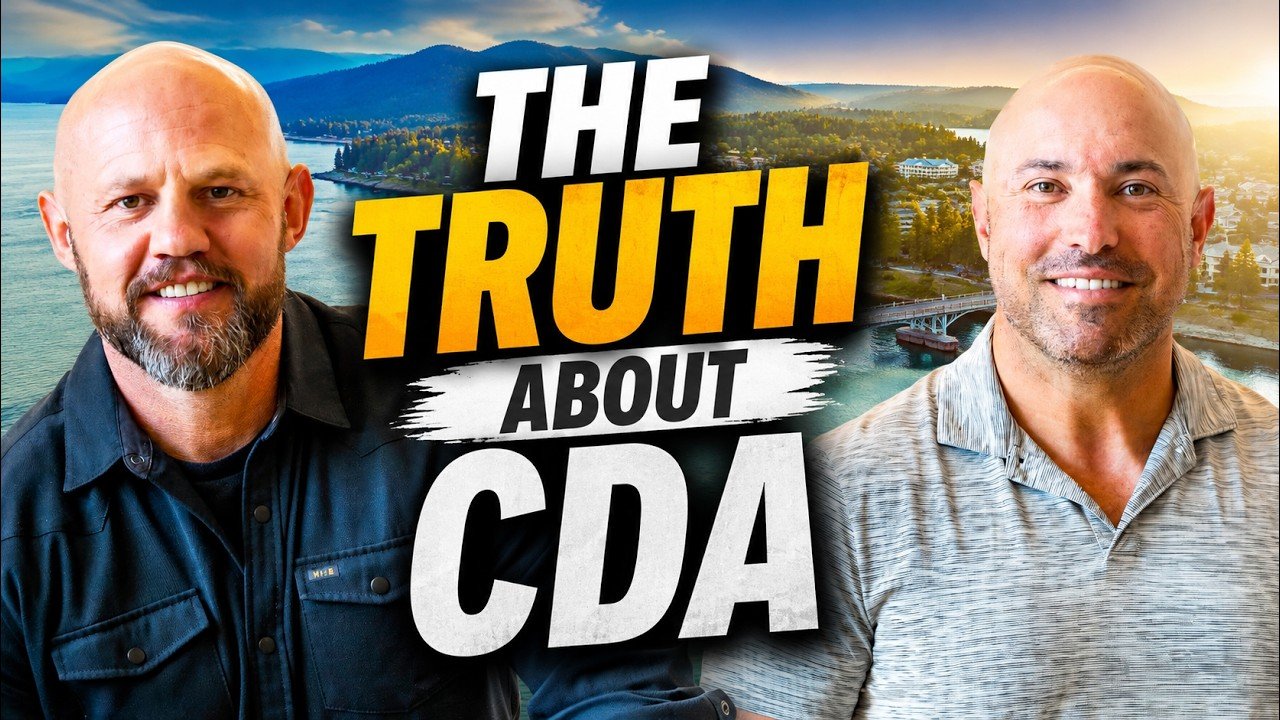
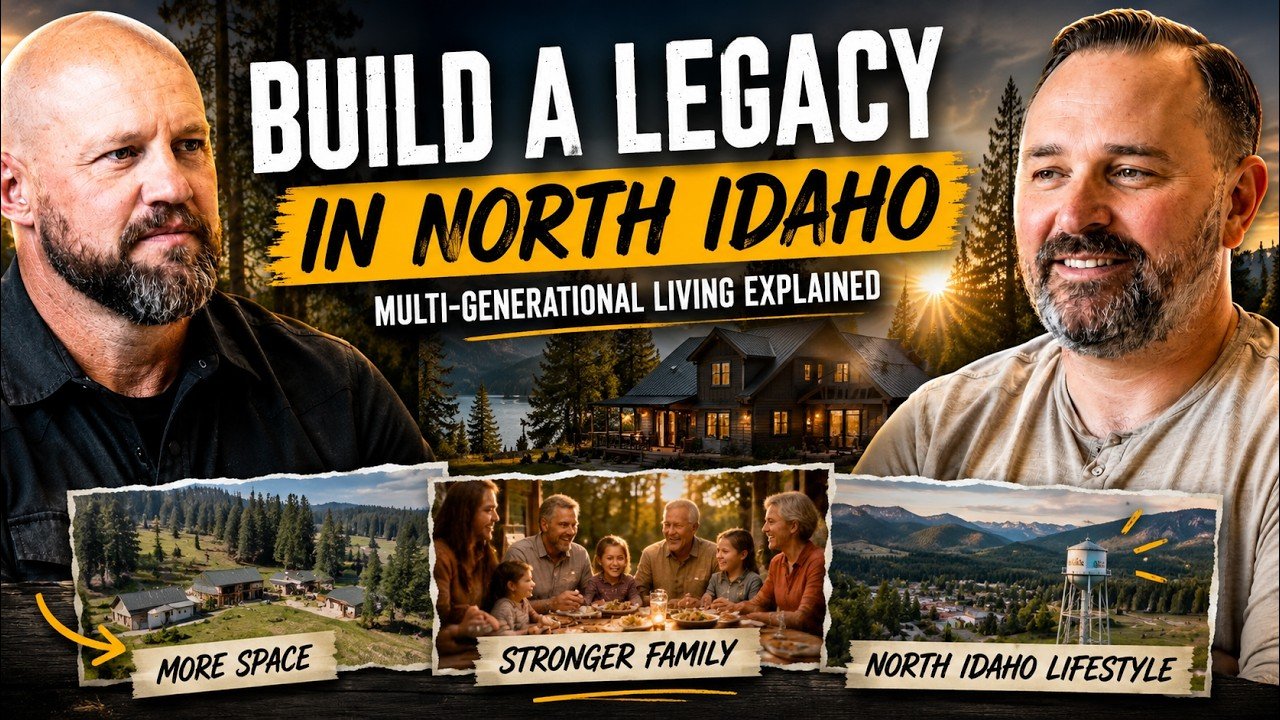
For law enforcement officers considering a move to North Idaho, changing where you live does not always require changing where you work.
In this episode of the North Idaho Experience podcast, Eric and Dave sit down with Kyle, an experienced law enforcement officer who began his career in Georgia before working for agencies in Western and Eastern Washington. Today, he continues working in Washington while raising his family in Idaho.
The conversation explores how policing has changed during his career, why agency leadership matters, what families should consider before relocating, and what it is really like to cross the state line for work.
For officers who have invested years in a Washington retirement system but want the lifestyle North Idaho offers, working in Washington and living in Idaho may provide a practical middle ground.
A Law Enforcement Career Across Three Regions
Kyle began his career in Georgia in 2011 before lateraling to the City of Kirkland in Washington. After several years in municipal law enforcement, he moved to a county agency in Western Washington and eventually transferred to Eastern Washington.
Each location offered a different policing environment.
Georgia provided Kyle with an introduction to highly proactive law enforcement. Western Washington was much busier, with deputies sometimes handling dozens of calls during a shift. Eastern Washington has generally been slower, requiring officers to be more intentional about finding proactive work.
His experience demonstrates that policing can vary significantly by state, region, department, command staff, and local community expectations. Two agencies operating under the same state laws can still have very different cultures.
How Washington Policing Changed
A major portion of the episode focuses on changes Kyle experienced during his time in Washington.
He describes periods when pursuit restrictions, use-of-force rules, mental health response requirements, and department policies affected how officers performed their jobs. In his view, some changes pushed agencies away from proactive policing and toward a more reactive model.
Instead of finding criminal activity before another victim was created, officers sometimes felt limited to responding after a crime had already occurred.
The discussion does not suggest that every pursuit should continue regardless of the circumstances. Eric, Dave, and Kyle all acknowledge that pursuits create serious risks, particularly in residential areas, near schools, or during heavy traffic.
The officers describe the need to consider several factors:
The seriousness of the suspected crime, traffic conditions, time of day, whether the suspect has been identified, the danger posed to the public, and whether officers have another safe way to make the arrest.
Their larger concern is that departments must maintain the training and resources needed for situations in which a pursuit is necessary. Officers may still encounter homicide suspects, kidnappers, impaired drivers, or other individuals who present an immediate danger.
Policy and legal details can change, so officers considering a lateral move should verify current state laws and individual agency policies rather than relying solely on past practices or another officer’s experience.
Leadership Can Determine Officer Morale
Although state law influences police work, Kyle repeatedly returns to the importance of leadership.
He distinguishes between a boss who simply gives orders and a leader who remains connected to the realities of patrol. One sheriff he respected continued working patrol shifts after being elected, demonstrating that he understood what deputies experienced on the road.
That type of leadership can influence morale, retention, and officer confidence.
Kyle explains that officers are more likely to leave when they no longer feel supported, when discipline appears disconnected from context, or when command staff seems removed from frontline police work.
Proactive officers naturally encounter more traffic stops, arrests, pursuits, force reviews, and complaints. That makes fair, informed supervision especially important. Officers need accountability, but they also need leaders willing to understand why a decision was made before reaching a conclusion.
Why His Family Chose Idaho
Kyle and his wife eventually decided that Western Washington was no longer the best fit for their family.
Their decision involved more than his law enforcement career. They also considered their children’s education, proximity to grandparents, access to outdoor recreation, community culture, and the kind of environment in which they wanted to raise their family.
Florida was initially another possibility, but North Idaho offered the combination they were seeking.
Kyle had already spent time hunting in the region and developed an appreciation for its forests, mountains, wildlife, and open space. Hunting became more than recreation. It provided a way to decompress from the demands of police work and reconnect with the natural world.
That access is one of North Idaho’s defining qualities. A resident can enjoy the restaurants, events, and activity of Coeur d’Alene while remaining a short drive from quiet forests and mountain trails.
Families researching the area can explore North Idaho communities to compare the settings, amenities, and lifestyles available throughout the region.
A Different Sense of Community
One of the first differences Kyle’s family noticed was how often strangers waved to them.
In Western Washington, a wave usually indicated that people already knew one another. In Idaho, neighbors regularly waved simply because they were neighbors.
That small gesture reflected a larger cultural difference.
At Kyle’s first homeowners association meeting, he discovered several current or retired law enforcement officers living nearby. When he explained that neighbors might occasionally hear his patrol vehicle leaving for work, residents welcomed him and expressed appreciation for having a police officer in the neighborhood.
The experience contrasted with the concern some officers feel when parking a marked patrol vehicle outside their homes elsewhere.
Kyle also noticed more children playing outside, riding bikes, exploring neighborhoods, and building friendships face-to-face. For his family, those everyday interactions helped make Idaho feel like home.
Anyone comparing housing options near the state line may also benefit from learning more about relocating to Coeur d’Alene, Idaho and surrounding communities such as Post Falls, Rathdrum, Hayden, and Hauser.
Working in Washington and Living in Idaho
Kyle’s current arrangement allows him to live in Idaho while remaining employed by a Washington agency within an approved distance from the state line.
For him, the arrangement preserves the retirement benefits and earning potential he has built during more than a decade in Washington law enforcement. Starting over in another state could mean accepting a significant pay reduction and entering a new retirement system.
The commute and Idaho income-tax obligations are considerations, but Kyle believes other expenses help balance the difference. Housing location, fuel, vehicle registration, benefits, retirement rules, and family priorities should all be included when comparing the true cost of each option.
Agency residency requirements also differ. Officers should confirm how far they are permitted to live from their jurisdiction, whether take-home vehicles can cross state lines, and how commuting affects call-back responsibilities.
Is the Move to North Idaho Worth It?
For Kyle’s family, the answer is yes.
North Idaho offered the outdoor access, community environment, family lifestyle, and sense of personal freedom they wanted. At the same time, remaining employed in Washington allowed Kyle to protect the career investment he had already made.
His experience shows that relocation does not have to be an all-or-nothing decision. Law enforcement officers may be able to evaluate opportunities on both sides of the border and create an arrangement that supports their careers without sacrificing the lifestyle they want for their families.
For more conversations about relocation, local culture, law enforcement, and everyday life in the region, visit the North Idaho Experience media and blog library.
Thinking about working in Washington and living in Idaho? Contact the North Idaho Experience team for local guidance on communities, commute considerations, and homes near the state line.