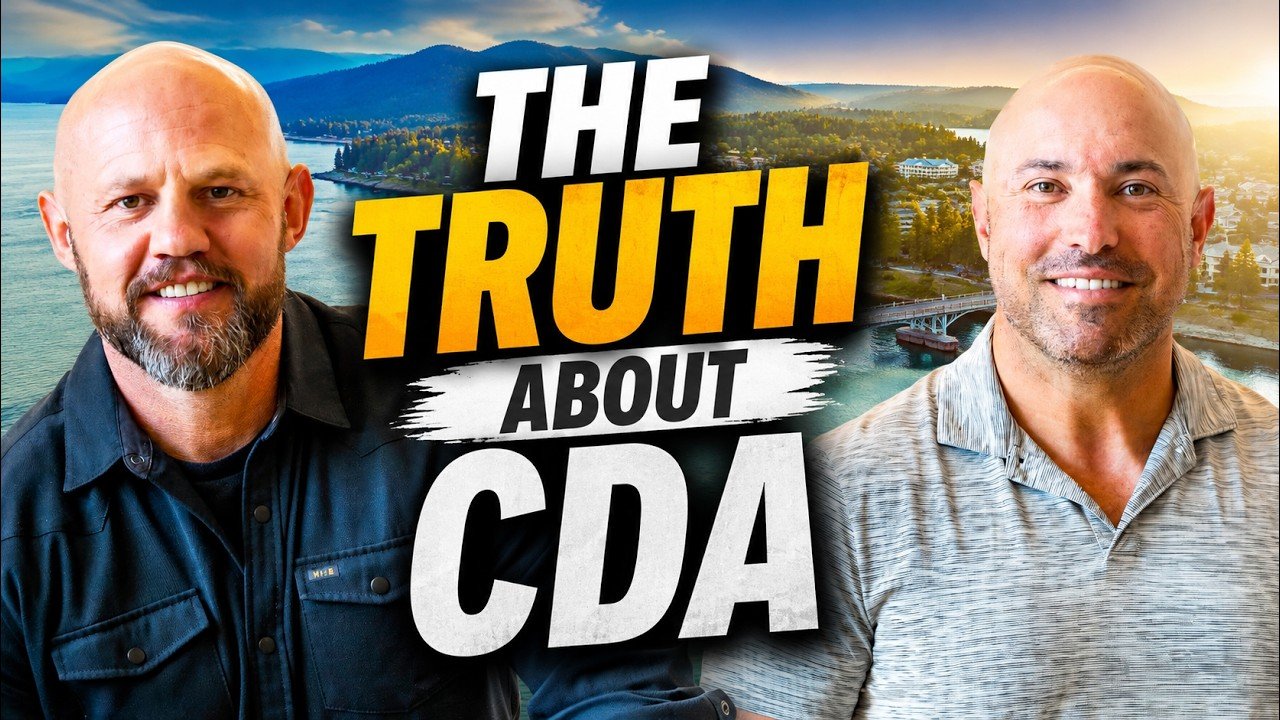
For years, Washington residents considering a move east had one major financial talking point in their favor: no traditional state income tax. But according to the latest discussion on the North Idaho Experience podcast, changing tax proposals, business regulations, public-safety concerns, and rising costs are causing some residents to rethink whether staying in Washington still makes sense.
In this episode, the North Idaho Experience team takes a deep dive into several Washington policies they believe could accelerate an already noticeable migration of families and businesses toward Idaho.
The conversation covers income taxes, estate taxes, business expenses, commercial vacancies, public safety, first-responder pensions, and one larger question: What happens when people can choose to live and work somewhere that better reflects their priorities?
Washington’s Income Tax Debate Takes Center Stage
One of the biggest topics in the episode is Washington Senate Bill 6346.
The hosts discuss the bill as a major shift in Washington’s approach to taxing income, particularly for high earners. Their concern extends beyond who may initially be subject to the tax. They question whether thresholds or rates could eventually change as legislators look for additional revenue.
For people considering moving from Washington to North Idaho, that uncertainty can become part of a much larger financial calculation.
A household may compare property taxes, fuel costs, housing expenses, state taxes, business regulations, and overall cost of living rather than focusing on any single tax.
The hosts argue that the conversation should ultimately be about total tax burden and what residents receive in return for what they pay.
Estate Planning Is Part of the Conversation Too
The podcast also examines Washington’s estate tax and changes the hosts believe could affect more families over time.
This is especially relevant in parts of Western Washington where long-held homes have appreciated dramatically. A property that may have been purchased decades ago for a relatively modest amount can now represent millions of dollars in an estate.
That creates a concern for families who want to pass homes, businesses, or other assets from one generation to another.
The hosts’ broader point is that moving decisions are not always motivated by what a family pays today. Some people are looking 10, 20, or 30 years ahead and asking what their financial legacy could look like under different state tax structures.
Business Owners Are Watching Closely
The episode also spends considerable time discussing Washington’s business environment.
For small and midsize business owners, the hosts argue that payroll-related taxes, gross-receipts taxes, regulations, and other operating expenses can affect hiring and expansion decisions.
While many tax debates focus on enormous corporations such as Amazon or Microsoft, the North Idaho Experience team emphasizes that policy changes can also affect companies with a few dozen employees.
Those businesses matter because they create the kinds of jobs North Idaho communities increasingly need.
As North Idaho grows, there is strong demand for employment that allows younger residents to build careers without leaving the region. Manufacturing, skilled trades, technology, healthcare, construction, and other industries can help diversify the local economy beyond tourism and retirement-driven growth.
For business owners considering a relocation, places such as Post Falls, Rathdrum, Hayden, and Coeur d’Alene can offer proximity to Spokane while still providing access to Idaho’s business environment and North Idaho lifestyle.
Seattle’s Commercial Vacancy Problem
Another major topic is downtown Seattle’s commercial real estate market.
The hosts point to high office vacancy rates and declining commercial property values as evidence that businesses are reconsidering downtown operations.
They also criticize proposals that would tax vacant commercial properties, arguing that those policies could place another burden on owners who are already struggling to attract tenants.
Whether someone agrees with their conclusions or not, the broader trend is worth watching: remote work has changed the relationship between employment and geography.
A professional earning a Seattle-level salary may no longer need to live within commuting distance of downtown Seattle.
A business owner may also have more flexibility to locate operations where costs, regulations, workforce availability, and quality of life align with long-term goals.
That flexibility has changed the relocation conversation throughout the Inland Northwest.
Why North Idaho Keeps Entering the Conversation
So why North Idaho?
The hosts repeatedly return to quality of life.
For many people they speak with, the appeal is not simply lower taxes. It is the combination of public safety, outdoor recreation, community involvement, property ownership, family life, and access to lakes, mountains, trails, hunting, fishing, and four-season recreation.
Communities like Coeur d’Alene and Post Falls also offer access to restaurants, healthcare, shopping, schools, and employment without completely giving up the smaller-community atmosphere that draws many people to the region.
The podcast also highlights a reality North Idaho residents already understand: growth is happening.
The question is less about whether people will continue moving here and more about how the region manages that growth while preserving what makes it attractive.
Remote Work Changed the Rules
One of the most important shifts discussed in the episode is the rise of remote work.
A generation ago, a highly paid technology employee might have needed to live near Seattle, Portland, San Francisco, or another major employment center. Today, many professionals have significantly more geographic freedom.
That means states and communities are increasingly competing for residents.
Families can evaluate schools, taxes, housing, politics, recreation, safety, community culture, and lifestyle before deciding where they want to establish roots.
The hosts describe people almost like “free agents,” able to choose the community offering the best overall fit.
For North Idaho, that has created both opportunity and responsibility. New residents can bring businesses, investment, professional experience, and community involvement, but rapid population growth also adds pressure to roads, housing, utilities, schools, public safety, and natural resources.
Is North Idaho Right for You?
Moving across a state line is about much more than tax rates.
It means leaving friends, family, professional networks, familiar neighborhoods, and often a place that has been home for decades.
That is why the North Idaho Experience team encourages potential newcomers to research carefully rather than making the decision based on one headline or political issue.
Visit communities in different seasons. Compare housing costs. Research employment, healthcare, schools, property taxes, utilities, and commute patterns. Spend time in Coeur d’Alene, Hayden, Post Falls, Rathdrum, and the rural areas surrounding them.
Most importantly, decide whether the lifestyle actually fits your family.
If Washington’s changing political, financial, or business environment has you considering a move, start a conversation about relocating from Washington to North Idaho with the North Idaho Experience team. They can help you understand the communities, housing options, and lifestyle differences before you decide whether North Idaho is the right next chapter.