What motivates a former police officer, entrepreneur, real estate broker and saloon owner to run for governor?
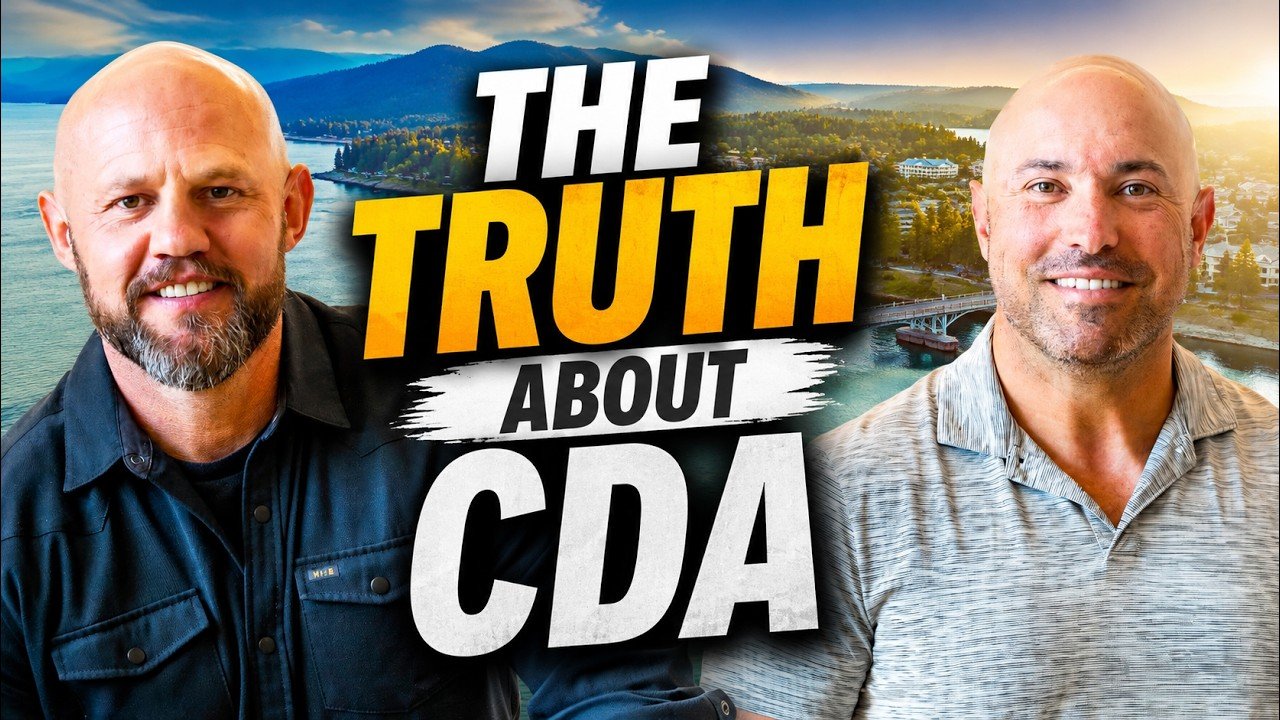
In this episode of the North Idaho Experience podcast, Eric and Dave sit down with Mark Fitzpatrick for a wide-ranging conversation about his background, business experience, political philosophy and vision for Idaho.
Fitzpatrick entered Idaho’s 2026 Republican gubernatorial primary as a challenger to incumbent Governor Brad Little. During the interview, he presents himself as a political outsider focused on government transparency, lower taxes, reduced bureaucracy and greater public involvement in state government.
Editor’s note: This interview was recorded during the 2026 campaign. Idaho’s Republican primary took place on May 19, 2026, and Governor Brad Little won the party’s nomination.
The North Idaho Experience provides long-form interviews with candidates to help residents hear their positions directly. An appearance on the podcast should not be interpreted as an endorsement by the North Idaho Experience real estate team.
From Law Enforcement to Entrepreneurship
Fitzpatrick grew up in California in a law-enforcement family. His father spent approximately 40 years working as a police officer, including service with the Los Angeles Police Department and Simi Valley Police Department.
After briefly attending the United States Naval Academy, Fitzpatrick returned to California, played Division I soccer at California State University, Northridge, and attended the Orange County Sheriff’s Academy.
He later served with the Newport Beach Police Department while simultaneously building several businesses. As one company expanded to approximately 25 employees, balancing police work, entrepreneurship and a family of eight became increasingly difficult.
Fitzpatrick eventually left law enforcement to focus on business full time.
That decision brought both success and significant setbacks. In the interview, he recalls losing a major international contract and being forced to lay off employees. The experience helped shape his views about regulation, taxation and the challenges facing small-business owners.
He and his family moved to Idaho in 2018.
Why Fitzpatrick Entered the Governor’s Race
Fitzpatrick says he had not previously planned to seek public office. His decision to run developed from frustration with state government, bills that failed in the legislature and what he viewed as insufficient accountability from elected officials.
He argues that Idaho’s Republican label does not always reflect the way its government operates. His criticism focuses on the growth of state agencies, increased spending and a political culture that he believes allows important decisions to happen without enough public scrutiny.
Fitzpatrick’s campaign platform emphasized cutting taxes, reducing bureaucracy, addressing illegal immigration, protecting parental rights and increasing accountability within state agencies. Those positions were also featured on his official campaign website during the election.
Throughout the podcast, Fitzpatrick repeatedly returns to one central idea: citizens must pay closer attention to state and local government.
Transparency as a Governing Philosophy
Fitzpatrick argues that public officials should regularly answer unscripted questions from the people they represent.
As governor, he says he would have held public forums around Idaho where residents could question him directly and receive answers on camera. When an immediate answer was unavailable, he says his administration would research the issue and provide a public response later.
This approach contrasts with political events where questions are screened in advance or participation is limited to invited organizations.
For Fitzpatrick, transparency would also include easier access to government records, greater willingness to conduct audits and clearer explanations of how taxpayer money is being used.
The hosts connect this idea to their work with Idaho CourtWatch, which was created to give residents more information about judges and court performance. Their broader argument is that accountability becomes difficult when voters cannot easily find reliable records about public officials.
Property Taxes and Government Spending
One of Fitzpatrick’s central campaign priorities was reducing or eliminating property taxes.
He argues that Idaho should not simply replace property taxes with another broad tax. Instead, he proposes reducing the size and cost of state government while investigating alternative sources of revenue.
During the interview, Fitzpatrick discusses the possibility of generating more state income through Idaho’s natural resources, including mining. He questions whether Idaho receives an adequate return from companies extracting valuable resources within the state.
Fitzpatrick acknowledges that he is not a mining or public-finance expert and describes his proposal as an area requiring significantly more research. He suggests that higher royalties or other revenue arrangements might eventually help fund public services while reducing the burden on property owners.
The discussion also examines why Idaho residents are often skeptical of taxes and school levies. The hosts note that many new residents arrive from states where they witnessed expanding taxes, wasteful spending or limited accountability.
For these residents, resistance to taxes may reflect distrust of government management rather than opposition to schools, roads or emergency services.
Managing Idaho’s Continued Growth
Idaho’s population growth is another major subject in the conversation.
Fitzpatrick and the hosts agree that many people moving to Idaho are motivated by its relative safety, outdoor lifestyle, political culture and business environment. They argue that newcomers who escaped high taxes or restrictive policies may be particularly motivated to prevent similar changes in Idaho.
At the same time, rapid growth creates serious challenges.
New residents increase demand for housing, roads, schools, law enforcement, water and other public services. Communities must determine how to accommodate that growth without placing an unfair burden on existing residents or losing the qualities that attracted people in the first place.
Fitzpatrick says Idaho should compete for productive residents and businesses by protecting individual liberty, reducing unnecessary regulation and maintaining a government that operates openly.
State Sovereignty and Idaho’s Public Lands
The interview also explores the relationship between Idaho and the federal government.
Fitzpatrick supports limiting federal control and giving Idaho greater authority over land and natural resources within its borders. He argues that state management could create additional economic opportunities and allow Idaho residents to have more influence over decisions involving mining, energy and public access.
However, he also acknowledges that transferring or changing control of federal lands would involve legal and constitutional questions that require further study.
The discussion expands into a proposal for an Idaho state defense force or organized state guard that would operate separately from the federally controlled National Guard.
Supporters might view such an organization as a resource during wildfires, floods, earthquakes or other emergencies. Any serious proposal would require clearly defined authority, oversight, training standards, funding and compliance with federal and state law.
Old State Saloon and the Value of Open Debate
Fitzpatrick is also known as the owner of Old State Saloon in Eagle, Idaho.
He describes the business as an attempt to recreate the traditional public house—a place where people gather to discuss politics, religion, culture and community issues rather than watching televisions or avoiding difficult subjects.
Speakers invited to the saloon are expected to take questions from the audience. Fitzpatrick says that requirement reflects the same standard he believes should apply to political candidates and government officials.
The business has also attracted national attention for controversial promotions and events. In the podcast, Fitzpatrick discusses the criticism, online harassment and threats he says followed several of those campaigns.
These experiences, he explains, helped prepare his family for the public scrutiny involved in a statewide political race.
An Informational Conversation for Idaho Residents
The Mark Fitzpatrick Idaho governor interview offers an extended look at the candidate’s personal history, priorities and political approach during the 2026 primary campaign.
Whether viewers agree or disagree with his proposals, the conversation highlights the importance of examining candidates beyond campaign slogans, party labels and brief advertisements.
Long-form interviews allow voters to hear how candidates respond to follow-up questions, acknowledge areas where they lack expertise and explain the experiences shaping their positions.
To explore additional conversations with Idaho candidates, business owners and community leaders, visit the North Idaho Experience media and blog library.
Are you researching a move to the area and looking for honest information about its communities, culture and real estate market? Contact the North Idaho Experience team to begin the conversation.