What happens when a career built around strength, discipline, and military service comes to an end?
For retired Navy SEAL Neil Dyer, leaving the teams meant confronting questions about identity, family, faith, and purpose. His journey eventually brought him from Southern California to the mountains outside Bonners Ferry, where he now uses his experience to provide faith-based mentorship for young men, veterans, first responders, and aspiring warriors.
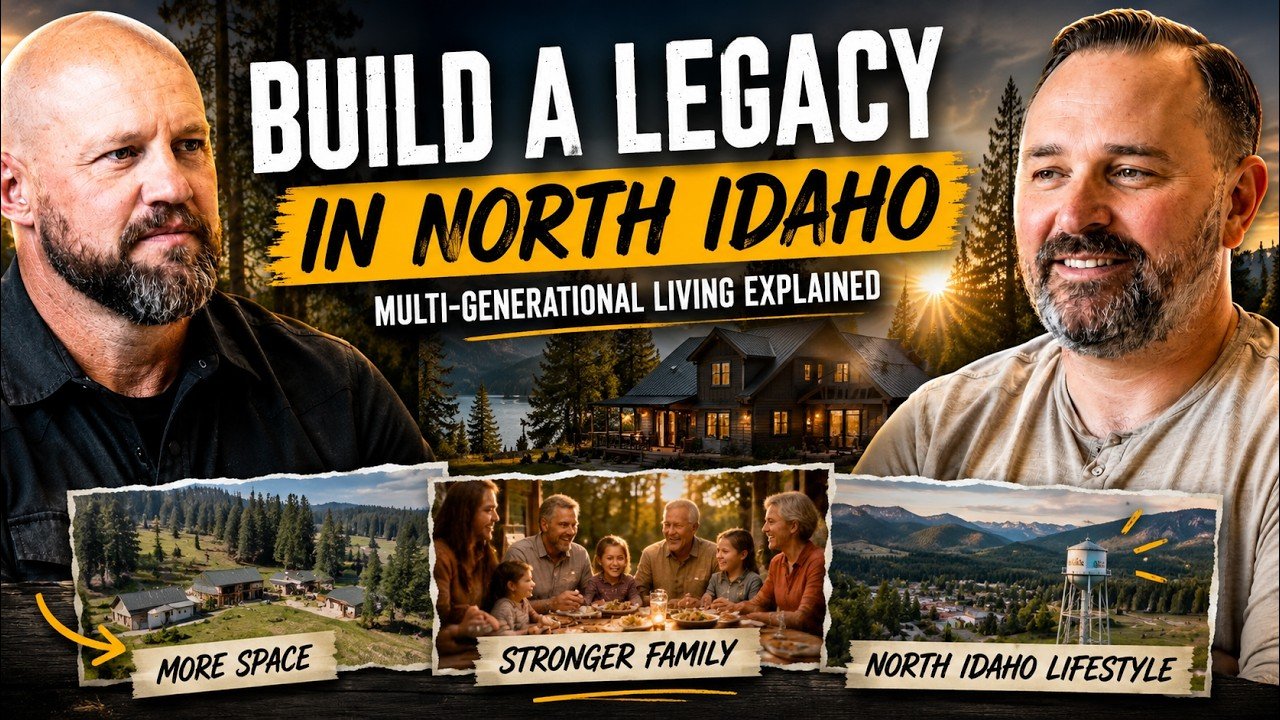
In this episode of the North Idaho Experience podcast, Neil joins Eric and Dave for a candid conversation about his Navy career, personal struggles, marriage, Christian faith, relocation to North Idaho, and the mission behind Warriors Rise.
Watch the full North Idaho Experience interview with Neil Dyer to hear his story in his own words.
Starting at the Bottom and Becoming a Navy SEAL
Neil did not enter the Navy with a carefully planned path toward Naval Special Warfare. He joined to escape a destructive lifestyle that he believed could eventually lead to prison, an overdose, or an early death.
He began as an undesignated seaman and later became a boatswain’s mate. During a deployment, he encountered special operations personnel and became curious about their work. That curiosity eventually led him to Basic Underwater Demolition/SEAL training, commonly known as BUD/S.
Shortly before training, Neil seriously injured his shoulder while snowboarding. Believing that the injury would prevent him from graduating, he stopped preparing as seriously as he had before. Nevertheless, he reported to training and decided to see how far he could go.
Rather than concentrating on the entire course, he focused on reaching the next meal, the next evolution, and the next day. He continued getting stronger and ultimately completed the pipeline without being rolled into another class.
Neil went on to serve approximately 20 years in the Navy, complete multiple combat deployments, train other operators, and participate in specialized research, development, and international training.
When the Mission Becomes Your Identity
The discipline required to succeed in an elite military unit can become inseparable from a service member’s identity.
Neil admits that the SEAL trident once came before nearly everything else in his life, including his marriage. As he prepared to pursue another demanding assignment, his wife made it clear that she would not continue following him down the same path.
A respected command master chief helped Neil see the long-term consequences of choosing the job over his family. The mentor explained that military service would eventually move on without him, while his damaged family relationships might never be restored.
Neil canceled his orders and chose his wife.
That decision came with professional consequences and uncertainty, but it also marked an important change in how he viewed success. His story offers a reminder to military members and first responders: the organization will replace every position eventually, but the people waiting at home cannot replace a husband, father, or trusted friend.
Confronting Grief, Anger, and Destructive Coping
Neil’s transition was not immediate or easy.
After returning from Afghanistan, he learned that his brother had attempted suicide and was being kept alive through medical support. Neil and his wife returned to New Mexico to say goodbye and met his brother’s infant son.
Concerned about the child’s living conditions, they eventually brought their nephew into their home and adopted him. The process placed enormous strain on a marriage that was already struggling, but it also moved Neil and his wife toward parenthood, community, and faith.
During this period, Neil was still relying on alcohol and self-inflicted burns as ways to process grief, combat experiences, and emotional pain. One night, after drinking and repeating the ritual, he collapsed in the shower and began telling God that he quit.
For a man trained never to quit, surrender became the beginning of healing.
Neil describes that moment as the start of releasing pride and what he now considers a false understanding of masculinity. His wife prayed over him, and he attended church with her the following day.
Redefining Meekness as Strength Under Control
One of the central ideas in the conversation is Neil’s definition of meekness.
He once associated meekness with weakness, passivity, and an inability to confront danger. His faith eventually changed that understanding. He now describes meekness as strength under control.
That distinction forms the foundation of what he calls the warrior-priest mindset.
A warrior without discipline may act from anger, ego, or a desire for personal glory. A disciplined warrior has the ability to act but understands when, why, and for whom that strength should be used.
For Neil, mature masculinity is not about avoiding conflict or being agreeable in every circumstance. It is about establishing values, controlling destructive impulses, protecting others, accepting responsibility, and directing strength toward what is good.
Why the Dyer Family Moved to North Idaho
Neil and his wife owned what appeared to be their dream property in Southern California: acreage, mountain views, a shooting range, a church community, and a home overlooking the ocean.
Still, they felt called to leave.
Their search gradually led them toward Bonners Ferry. After visiting Spokane, Coeur d’Alene, Sandpoint, and communities farther north, they felt especially connected to the people and culture of Boundary County.
The family purchased a rural property without seeing it in person and moved north in 2020. The steep dirt road and remote setting created immediate challenges, but the property eventually became the base for their family life and ministry.
Neil’s experience highlights an important consideration for anyone planning a move to North Idaho: finding the right community may matter as much as finding the right house.
What Is Warriors Rise?
Warriors Rise grew from an earlier ministry focused on giving veterans and first responders space to rest, reflect, and rebuild resilience after trauma, traumatic brain injuries, and the loss of professional identity.
The newer program focuses heavily on the next generation.
Warriors Rise introduces boys and young men to faith, responsibility, practical abilities, physical challenges, and service. Its programs include obstacle courses, Bible studies, climbing and rope work, construction, land-based skills, navigation, vehicle recovery, and other demanding activities.
Its most challenging experience is known as the Gauntlet, an extended test designed to serve as a modern rite of passage. Participants travel long distances, complete difficult tasks, work through fatigue, and discover that they can continue when circumstances become uncomfortable.
The objective is not hardship for its own sake. It is to help young men develop confidence, discipline, humility, competence, and a clearer sense of purpose.
From the Battle Belt to the Tool Belt
Neil also shares a developing mentorship model he calls “tool belt to battle belt.”
The idea is that a complete protector must know how to build as well as defend. Shooting ability and tactical knowledge may have value in certain professions, but so do construction, maintenance, problem-solving, service, and the willingness to do ordinary work.
A young veteran who came to Neil expecting tactical mentorship instead found himself helping repair a damaged roof, working on plumbing, hanging drywall, and living in a remote cabin. Through that work, Neil saw the young man’s persistence, humility, and willingness to learn.
That became part of the vetting and mentoring process.
Real leadership is not always dramatic. Sometimes it means repairing a house, feeding a family, teaching a child, supporting a neighbor, or putting your head down and completing necessary work.
Building Purpose Through Faith, Family, and Community
Neil’s story is ultimately about transformation.
He moved from building his identity around an elite military title to finding purpose in his faith, marriage, children, local community, and responsibility to the next generation. His experiences were not erased, but they were redirected toward mentoring others.
North Idaho gave the Dyer family a setting where they could build that mission through land, church relationships, practical work, and community involvement.
For more stories about veterans, local leaders, faith, family, and life in the region, explore the North Idaho Experience media library.
Considering a move to a place where community, outdoor living, family, and personal conviction remain central to daily life? Contact the North Idaho Experience team to begin exploring North Idaho.