What happens when old-school frontier wisdom meets social media, artificial intelligence, and a generation growing up in an increasingly digital world?
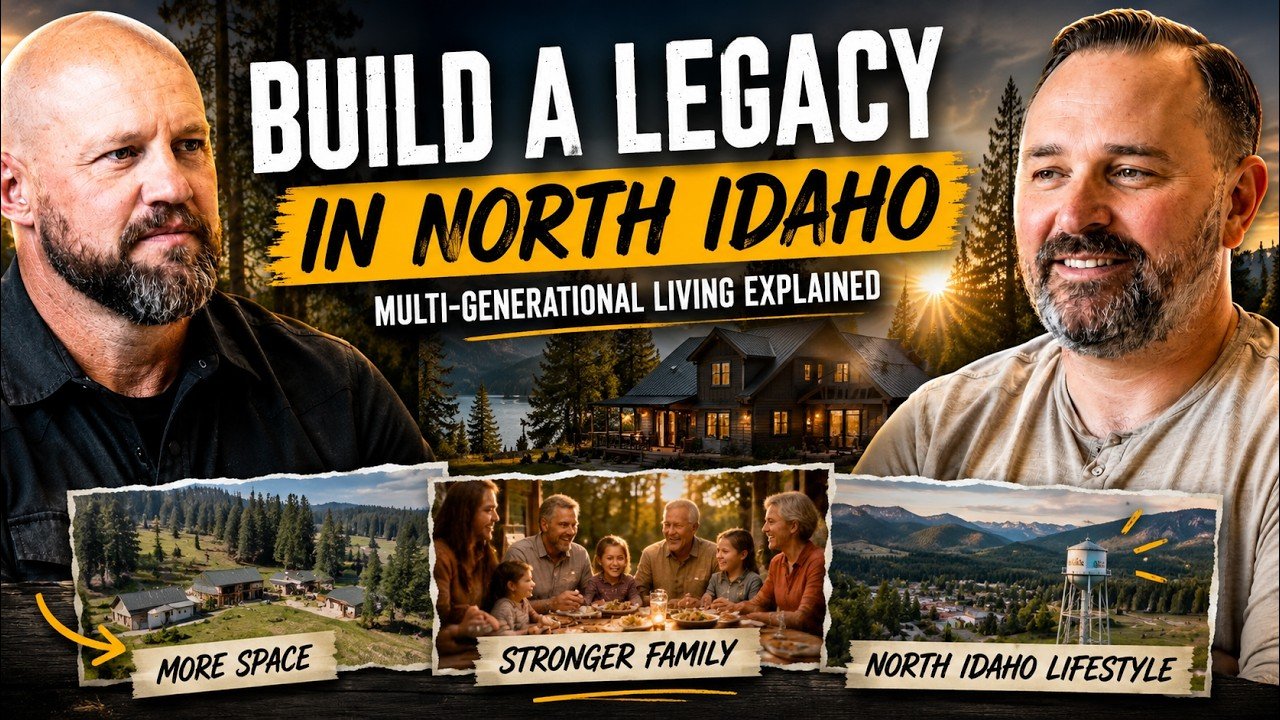
That question drives a wide-ranging conversation on this episode of North Idaho Experience with Chris Hunt, creator of Code of the West.
Chris joins the podcast to discuss his time working as an art director at Black Rifle Coffee Company, the life experiences that shaped him, and why principles passed down from fathers, grandfathers, cowboys, truck drivers, construction workers, and other hardworking people may be more relevant today than ever.
At the heart of the conversation is a simple idea: timeless principles still work, even when the world around us changes.
What Is Code of the West?
Code of the West began as Chris’s attempt to create something different from the typical social media formula.
Instead of chasing outrage, short attention spans, and whatever happened to be trending that week, Chris wanted to slow things down.
His content draws from what he describes as old-school frontier wisdom—the kinds of lessons that were often taught through a short phrase, a hard day’s work, or an example rather than a lecture.
“Talk less, say more.”
Keep your word.
Work when there is work to be done.
Have courage.
Do the right thing when nobody is watching.
Those concepts may sound simple, but Chris argues that there are layers underneath them. They create a framework for thinking through decisions instead of simply telling someone exactly what to believe.
That’s an important distinction.
Code of the West is less about giving people answers and more about encouraging them to build a personal code that helps them find those answers themselves.
Lessons From Black Rifle Coffee Company
Before creating Code of the West, Chris worked as an art director at Black Rifle Coffee Company, where he had a front-row seat to the creative side of a rapidly growing company.
His work exposed him to branding, storytelling, direct-to-consumer marketing, social media, and what happens when millions of online impressions can translate into real business.
But it also taught him something about the incentives built into the internet.
Anger gets attention.
Controversy creates engagement.
Emotion can drive an algorithm.
Chris began wondering what would happen if someone deliberately went in the opposite direction—creating thoughtful content built around stories, experience, character, and principles rather than constantly trying to provoke another reaction.
That experiment eventually became Code of the West.
Suggested anchor text: Black Rifle Coffee Company
Why Real Experience Still Matters
One of the strongest themes throughout the episode is the importance of actually doing things.
Chris talks about working construction, traveling across the country with his truck-driving father, learning to fight while preparing to create a comic book, and completing brutally difficult trail work in the Cascades.
Those experiences gave him something a book, video, or social media post could never completely reproduce: perspective.
At one point, Chris describes reaching the top of a mountain after an exhausting climb during a period of tremendous personal grief.
The view was incredible.
But what made it powerful was not simply the scenery. It was everything required to get there.
You could find a photograph of the same mountains online in seconds.
You could not download the experience of earning that view.
That distinction becomes increasingly important in a world designed around convenience.
Courage Doesn’t Always Look Dramatic
When people hear the word courage, they may imagine soldiers, police officers, firefighters, or someone facing a life-or-death situation.
Those examples certainly require courage.
But the conversation also explores smaller forms of courage that shape everyday life.
It might mean speaking up during a meeting when everyone else is silent.
It could mean leaving a career that no longer fits.
It might be walking across a room and introducing yourself to someone.
For a teenager, courage might simply mean having a difficult conversation with a coach instead of avoiding it.
The point is not to pretend that every uncomfortable action is heroic.
It is to deliberately practice stepping into discomfort.
Small courageous decisions can build confidence for the bigger challenges that eventually arrive.
What Are Younger Generations Missing?
Late in the episode, the North Idaho Experience videographer, Austin, joins the conversation to offer the perspective of a 23-year-old.
That changes the discussion in an important way.
Instead of older generations simply guessing what younger adults need, they ask one directly.
Austin talks about seeing friends become trapped by their phones and social media while missing real-life experiences. He also describes the importance of having older mentors and positive male role models to turn to when he needs advice.
Chris sees that mentorship gap frequently through Code of the West.
Many younger people who contact him seem to feel that something is missing, even if they cannot define exactly what it is.
The answer may not be another motivational video.
It may be a real person willing to have a conversation.
AI, Social Media and Thinking for Yourself
Artificial intelligence adds another layer.
AI can help brainstorm, organize information, and make creative work more efficient. But everyone in the conversation returns to the same concern: efficiency should not replace thinking.
The same lesson applies to social media algorithms.
When a platform constantly shows you information designed specifically around your existing interests, it becomes easy to mistake your feed for reality.
Austin describes intentionally seeking opposing perspectives rather than simply accepting whatever his algorithm presents.
That habit may become one of the most valuable skills younger generations can develop.
Ask questions.
Look for another side.
Talk to people who have actually experienced what they are discussing.
Then make your own decision.
Why These Values Fit North Idaho
There is a reason a conversation like this feels at home in North Idaho.
Much of the lifestyle here still revolves around relationships, reputation, outdoor experiences, self-reliance, hard work, and community.
A handshake still matters.
Your reputation still follows you.
People still notice whether you show up when someone needs help.
None of those ideas belong exclusively to the West, and they certainly are not new. But they represent the operating system Chris is trying to preserve through Code of the West.
The challenge is not recreating the past.
It is carrying forward the principles that worked.
Build Your Own Code
Perhaps the best summary of Code of the West comes near the end of the conversation.
Chris does not want to tell people exactly how to vote, think, work, or live.
He wants to give them stories and principles that encourage them to think for themselves.
That may be especially valuable in a world increasingly filled with algorithms, AI-generated answers, influencers, and endless opinions.
Listen to people with experience. Seek mentors. Do hard things. Talk to people who disagree with you. Build real relationships. Keep your word.
Then take those lessons and build your own code.
Because old-school wisdom does not need to stay in the past.
Sometimes it is exactly what the future needs.