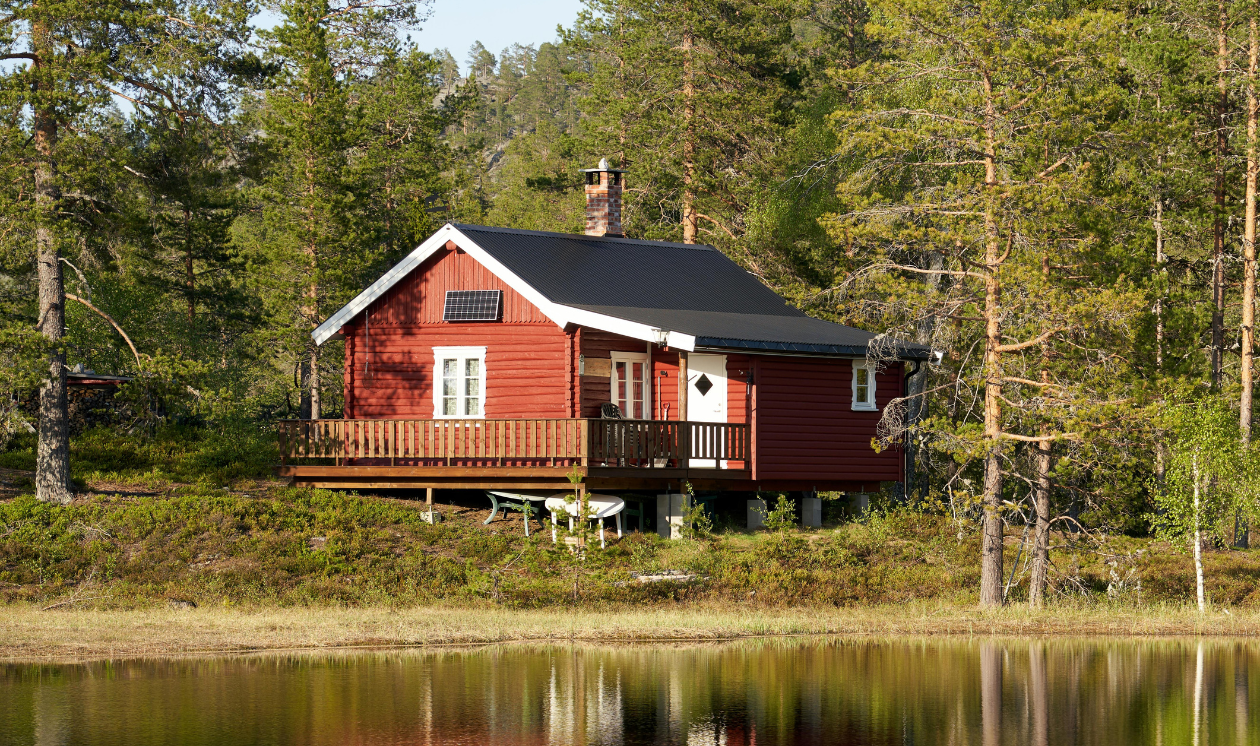
The idea of owning acreage in North Idaho is easy to understand. More privacy, room for a shop or animals, mountain views, fewer neighbors, and the freedom to create a property that fits your lifestyle can make rural land incredibly appealing.
But buying outside city limits comes with responsibilities that are easy to overlook while walking a beautiful wooded parcel. When a property is not connected to municipal water and sewer, the buyer may be responsible for creating and maintaining those systems independently.
For anyone considering off-grid living in North Idaho, three issues deserve careful attention before purchasing: water rights, wells, and septic systems. Understanding them early can help prevent an affordable-looking parcel from becoming an unexpectedly expensive project.
Water Rights and Water Access Are Not the Same Thing
One of the biggest misconceptions about rural property is that owning land automatically gives you unlimited rights to the water beneath or beside it.
Idaho does not recognize a general riparian right that allows a property owner to simply use surface or groundwater because it crosses or sits beneath their land. A water right is authorization to use public water for a specific beneficial purpose. Idaho generally follows the principle of “first in time is first in right,” meaning priority can become important when water supplies are limited. The Idaho Department of Water Resources maintains records and guidance for researching existing water rights.
Domestic wells can qualify for exemptions from the normal water-right permitting process, but buyers should not confuse that exemption with permission to use unlimited water. Idaho updated its domestic-use rules in 2026, including definitions and limitations affecting domestic uses, shared wells, subdivisions, irrigation, and certain regulated groundwater areas.
If you plan to irrigate significant acreage, support livestock, develop multiple homes, or use water commercially, investigate the property’s water situation before assuming your intended use will be allowed.
The True Cost of a Private Well
Finding a parcel without a water bill might sound like an instant savings. In reality, a private well moves responsibility for the water system from a utility company to the homeowner.
Before drilling a new well in Idaho, a drilling permit is required, and the work must be completed by an Idaho-licensed well driller.
The final expense can vary considerably based on how deep the well must be drilled, local geology, accessibility for equipment, and the components needed to deliver water to the house. The well itself is only part of the equation. Buyers may also need to budget for a pump, pressure tank, electrical service, trenching, water lines, storage equipment, filtration, or treatment.
Water quality is another consideration. Private domestic wells are not regulated under the federal Safe Drinking Water Act in the same way public systems are, meaning the property owner is responsible for making sure the water is safe. Idaho notes that groundwater can contain contaminants such as nitrate and arsenic.
When purchasing an existing rural home, consider testing both water quality and well performance rather than assuming that water flowing from the faucet tells the whole story.
Septic Suitability Can Make or Break a Homesite
A beautiful building site does not necessarily mean it is a suitable septic site.
Idaho requires permits for individual subsurface sewage disposal systems, with the state’s public health districts handling permitting and inspections. Soil conditions, slope, groundwater, nearby wells, surface water, and the size and location of the proposed home can influence what type of system can be approved.
For much of North Idaho, including Kootenai, Bonner, Boundary, Benewah, and Shoshone counties, septic questions are handled through the Panhandle Health District.
A standard septic tank and drainfield may be relatively straightforward on a suitable site. Challenging soils, steep terrain, shallow groundwater, or other site limitations can require additional engineering or an alternative septic system. That can substantially change the economics of developing rural land.
This is why a septic site evaluation should be part of your due diligence—not something you discover after closing. Idaho DEQ specifically recommends having a site evaluation performed before purchasing property and applying for a septic permit.
Budget for the Property You Want to Build, Not Just the Land
When comparing rural parcels near Coeur d’Alene, Hayden, Rathdrum, Sandpoint, Spirit Lake, Athol, or other North Idaho communities, the lowest-priced land is not always the least expensive property to develop.
A parcel with an existing productive well, documented water use, approved septic system, and accessible utilities may ultimately cost less than inexpensive raw acreage requiring significant infrastructure.
Before making an offer, investigate the well or expected drilling conditions, intended water use, existing water-right records when applicable, septic feasibility, drainfield location, and any restrictions affecting development. Leave room in your budget for water testing, pumping equipment, filtration, septic maintenance, and future system repairs.
Do Your Due Diligence Before You Buy
Off-grid living in North Idaho can offer the independence, privacy, and space many buyers are searching for. The key is knowing what lies beneath the property—not just appreciating what you see above ground.
Working with professionals who understand rural North Idaho can help you identify questions early, evaluate properties more realistically, and avoid surprises after closing.
If you’re searching for acreage, a rural home, or land for a future build, contact North Idaho Experience to start exploring North Idaho properties with a team that understands the lifestyle as well as the land.
The North Idaho State Fair returns to the Kootenai County Fairgrounds in Coeur d’Alene from August 21 through August 30, 2026. Whether you recently moved to the area, are visiting North Idaho, or have been attending for years, the fair offers a chance to experience the agricultural roots and community traditions that remain an important part of life here.
When and Where Is the North Idaho State Fair 2026?
The North Idaho State Fair takes place at the Kootenai County Fairgrounds, located at 4056 N. Government Way in Coeur d’Alene.
For 2026, the fair runs for 10 days, from Friday, August 21 through Sunday, August 30. General fair hours are listed as 11 a.m. to 10 p.m., although individual attractions and entertainment schedules vary throughout the event.
That location makes the fair easily accessible for residents throughout Kootenai County, including those living in Coeur d’Alene, Hayden, Post Falls, Rathdrum, and surrounding communities.
What to Expect at the Fair
Part of the appeal of the North Idaho State Fair is that there is something different around almost every corner.
Agriculture remains at the heart of the experience. Visitors can explore livestock exhibits, 4-H and FFA competitions, open-class livestock shows, educational programs, and displays highlighting the work of local youth and agricultural families. These exhibits offer a glimpse into a side of North Idaho that newcomers may not always see when first exploring the region.
Then there is the carnival. Rides and midway attractions operate throughout the fair, with single-day all-you-can-ride passes available for visitors looking to make an afternoon or evening of it.
And, of course, no trip to the fair is complete without fair food. Come hungry.
Rodeos, Concerts, and Grandstand Entertainment
The North Idaho State Fair has grown into more than a traditional agricultural fair. Its arena entertainment has become a major part of the annual experience.
The 2026 schedule includes motocross on August 21 and 22 and a demolition derby on August 23. Country music takes over the arena on August 24 and 25, with Lee Brice and Walker Hayes scheduled for the Party in the Dirt Concert Series.
The Gem State Stampede PRCA Rodeo follows from August 26 through August 30. The schedule includes Agricultural Appreciation Night, Xtreme Bulls, Tough Enough to Wear Pink, Patriot Night, and a Sunday Family Day performance.
Popular arena events can draw large crowds, so purchasing tickets in advance is a good idea if there is a performance you do not want to miss.
Know Before You Go
A little planning can make a day at the North Idaho State Fair much easier.
For 2026, regular gate admission is $14 for adults ages 13–59, while advance or online adult admission is $11. Youth ages 6–12, seniors 60 and older, and military members with ID qualify for discounted admission, while children five and younger enter free. Parking is listed at $7 per vehicle.
The fair also offers different promotions throughout its 10-day run. For example, opening Friday offers free admission until 4 p.m., Agricultural Awareness Day on August 26 includes free admission until 3 p.m., and Family Day on August 30 allows children 12 and younger to enter free until 3 p.m. Promotions and conditions vary by day, so check the official schedule before heading out.
If you are attending with children, comfortable shoes, sunscreen, water, and a plan for where to meet if anyone gets separated can go a long way. Evening temperatures can also feel considerably cooler than the afternoon heat, so bringing an extra layer is often worthwhile.
Why the Fair Says So Much About North Idaho Living
For someone considering a move to North Idaho, events like the fair provide a different perspective on the region than you will get by simply driving through neighborhoods or touring homes.
North Idaho is growing, but community traditions are still a significant part of the lifestyle. At the fair, agriculture, local organizations, youth programs, western heritage, motorsports, live music, and family entertainment all come together in one place.
It is also an opportunity to see how communities throughout the region overlap. Families from Coeur d’Alene may run into friends from Hayden. Rathdrum residents mingle with people from Post Falls. Rural and suburban lifestyles meet in the same livestock barns, grandstands, and carnival lines.
Those connections are part of what makes choosing a home in North Idaho about more than square footage or lot size. Where you live affects which community events become your traditions, how easily you can participate in local activities, and what everyday life looks like once the moving boxes are gone.
Experience North Idaho Beyond the Listings
The North Idaho State Fair 2026 is one of the best opportunities of the summer to experience the region’s community spirit firsthand. Spend an afternoon exploring the exhibits, catch a rodeo or concert, grab your favorite fair food, and enjoy one of those late-August evenings that make summer here memorable.
And if your visit has you wondering what it would be like to make North Idaho home, the right real estate decision starts with understanding the communities as well as the properties.
Contact North Idaho Experience to start exploring homes and communities throughout North Idaho. Our local team can help you find a place that fits not only how you want to live, but the North Idaho lifestyle you came here to experience.